Skip to product information
1 of 9

Toxin 3

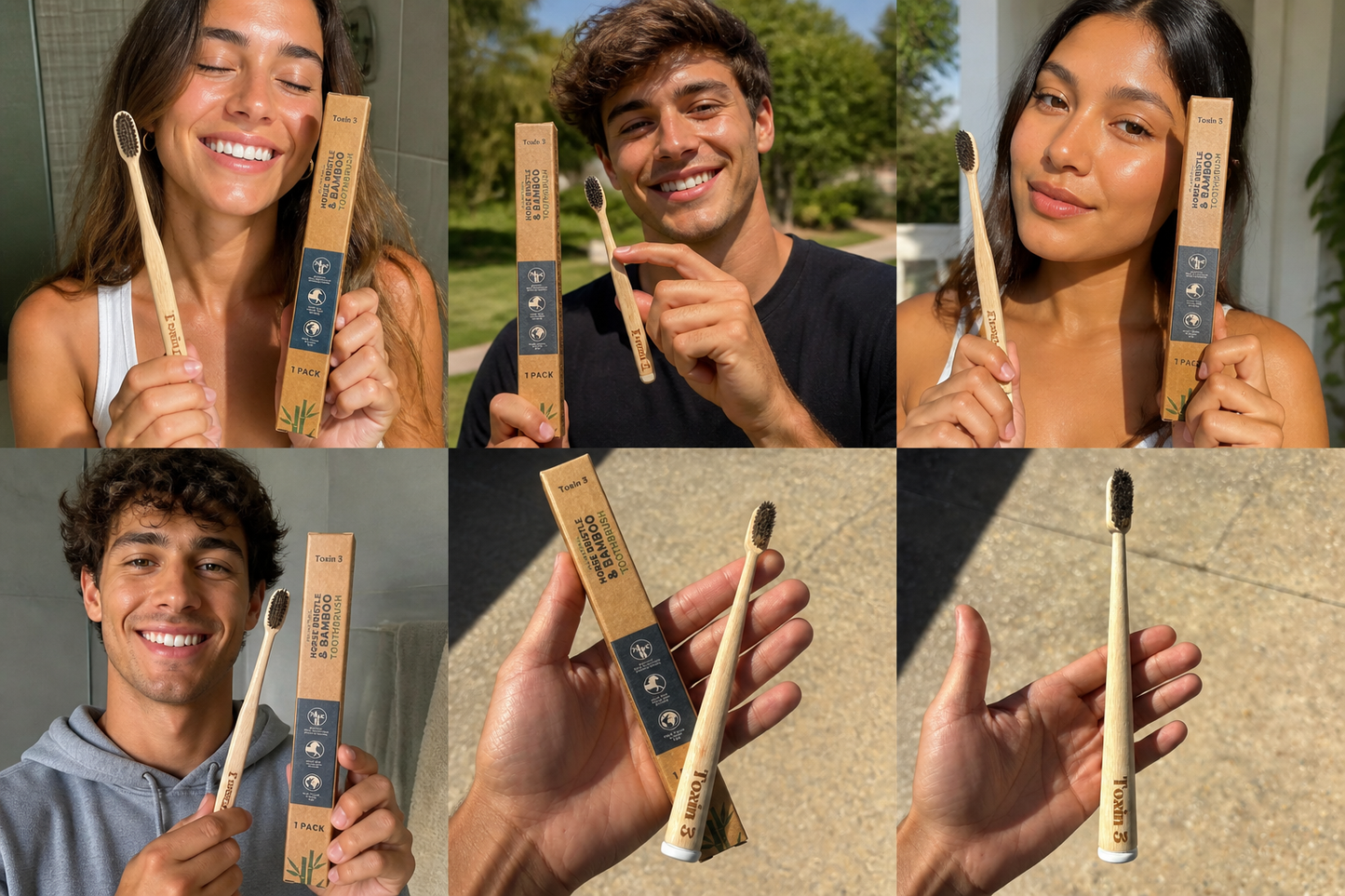
Toxin 3 Plastic-Free Toothbrush - Boar or Horse Hair (4-pack)

Toxin 3 Plastic-Free Toothbrush - Boar or Horse Hair (4-pack)

Regular price $54.00 AUD
Regular price Sale price $54.00 AUD
Sale Sold out
Quantity

Natural boar or horse hair. Bamboo handle. Zero plastic. Lab tested every batch.

Stop Brain Accumulation — Zero microplastics entering your bloodstream and brain tissue
Protect Fertility — Eliminate daily endocrine-disrupting chemical exposure from nylon bristles
Reduce Neuroinflammation — No plastic, no daily brain inflammation trigger
Protect Cognitive Health — Eliminate 88,000 microplastic particles per year
Lab Tested for Purity — Every batch verified. Zero toxins. Zero compromise.

View full details

FAQ

How long does one 4-pack last?

One brush per 6-8 weeks (dentist recommended replacement cycle). One 4-pack lasts one person approximately 6-8 months. If you have a family of 4, one 4-pack lasts one month.

What's the difference between boar and horse hair?

Boar hair is firmer and denser, better for plaque removal and those who prefer a deep clean feeling. Horse hair is softer and finer, gentler on sensitive gums. Both are made from natural keratin. Both shed zero microplastics. You can't choose wrong. Many customers order one of each and see which they prefer.

Why are natural bristles better than nylon?

Nylon is petroleum derived plastic that degrades and sheds microplastic particles with every brush, up to 120 particles per use. Those particles are absorbed directly through your gum tissue into your bloodstream, carrying BPA, PFAS and phthalates. Natural keratin bristles (same protein as human hair) do not degrade into microplastics because they were never plastic. They soften naturally over time, the way hair does.

Hmm.. how are these bristles sourced?

We use ethically sourced bristles from existing food industry byproducts. No animals are harmed specifically for our toothbrush. Compare that to plastic alternatives: 88 million toothbrushes end up in landfills annually, shedding microplastics into oceans and our food chain for centuries.

Bad News: Your Toothbrush is a Chronic Source of Brain Toxicity

  • The Daily Exposure

    Twice daily. 365 days a year. Thousands of microplastics into your mouth, digestion, bloodstream and organs. 88,000 particles per year from your toothbrush alone

  • The Brain Accumulation

    Microplastics cross your blood-brain barrier and accumulate in brain tissue, triggering neuroinflammation. Neuroinflammation = Alzheimer's risk, memory loss, cognitive decline

  • The Bamboo Lie

    Bamboo toothbrushes reduce landfill waste but don't fix the microplastic-in-your-body problem. Most bamboo toothbrushes still use plastic nylon bristles

Good News: You Can Eliminate This Brain Toxicity Source Today

The first recorded toothbrushes in human history were made using boar and horse hairs (plastic did not exist). It's time to return to natural oral care but we've replaced the bone with bamboo.

Toxin 3 Plastic-Free Toothbrush - Boar or Horse Hair (4-pack)

No Nylon: Zero synthetic fibres or microplastic shedding into your mouth or body.

Double Sterilized: Every batch lab-tested and heat-sterilized at 100°C for 6 hours.

Mould Resistant: Steam-carbonised bamboo handle and self-standing design resist moisture naturally.

What are experts saying

Don't just take our word for it

Dr. Seraphine Ruehs

Dr. Seraphine Ruehs

Microplastics Researcher

Microplastics can penetrate the blood-brain barrier and accumulate in brain tissue, triggering neuroinflammatory responses - Environmental Health & Toxicology Research

Dr. Romain Legrand

Dr. Romain Legrand

Neurotoxicology Lab

The accumulation of microplastics in neural tissue triggers chronic inflammation, which is implicated in Alzheimer's disease and cognitive decline

Dr. Leslie Lebreton

Dr. Leslie Lebreton

Ocean Microplastics Research

We are chronically exposed to microplastics through multiple pathways - air, water, food, and oral care products. Toothbrushes represent one of the most frequent daily exposures that most people don't realize they have